17 November 2026
Daily Newsletter
Report: Iran Developing Plans for Dirty Bomb Attack in Washington
The Facts
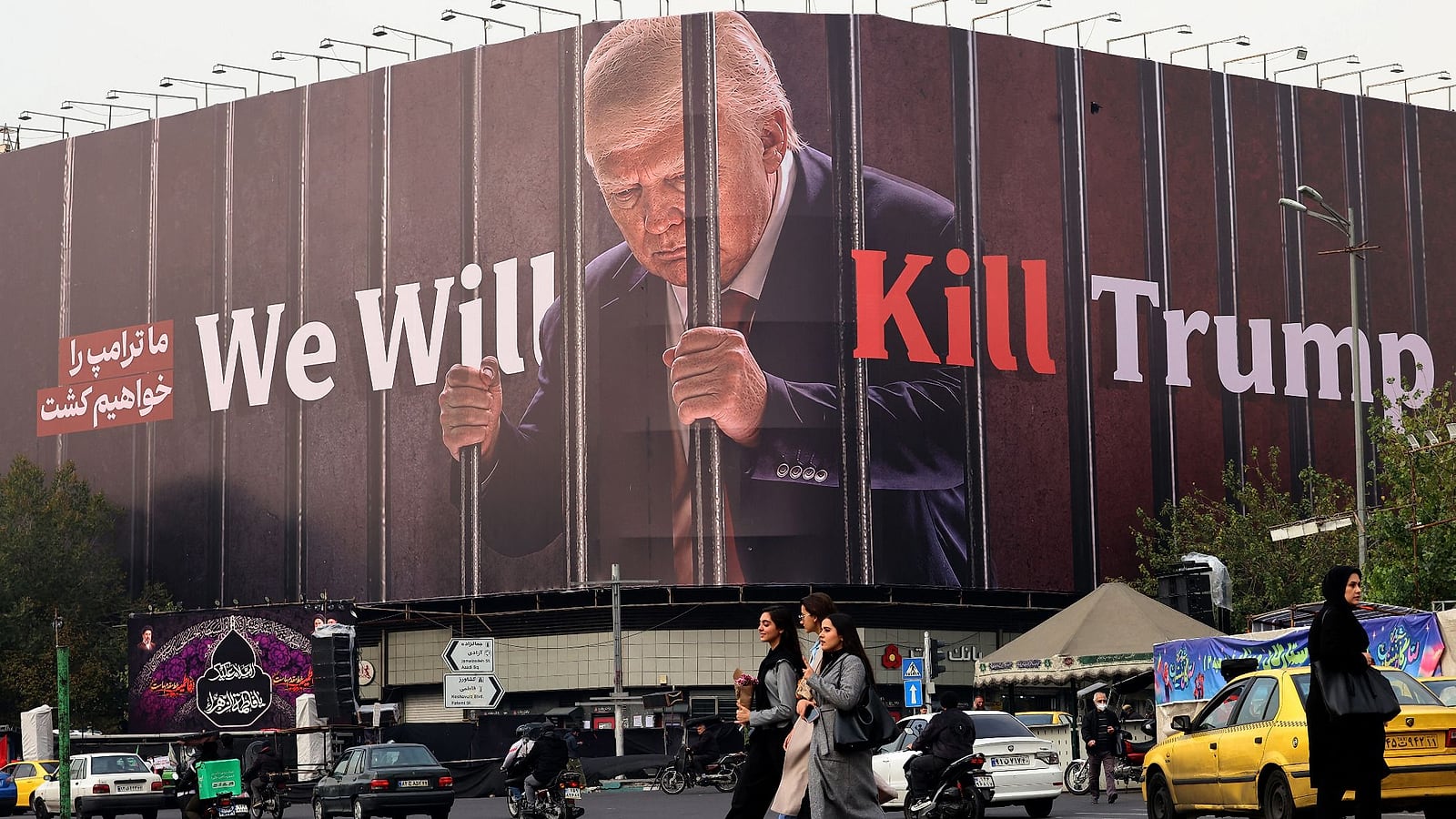
Iran is developing plans to target Trump administration officials with a dirty bomb or chemical weapon in Washington, CNN reported Monday, citing seven U.S. officials who called the plotting an effort to create options rather than an imminent attack.
U.S. intelligence picked up Iranian chatter about the plan, including claims that bomb-making materials were stashed inside the United States. Officials were split on the credibility of those claims and said dirty bombs are relatively easy to assemble.
According to two sources, the planning identified specific locations and targets, prompting several U.S. meetings over the past week. White House spokesperson Lauren Bis stated that the administration was monitoring threats but saw "no credible threats to the homeland."
The Spin
Pro-Trump narrative
Underfunding missile defense amid threats of a radiological attack on Washington risks leaving critical vulnerabilities exposed. Funding uncertainty could weaken interceptor coverage when protection matters most. Investing in the Golden Dome, including northern coverage through Greenland, will prove far less costly than facing the consequences of inadequate preparedness.
Establishment-critical narrative
Unsubstantiated claims by anonymous officials turn journalism into propaganda, as history shows the dangers of such narratives. Decades of warnings about Iran's nuclear ambitions remain contested, while even water infrastructure is portrayed as a military threat. Moreover, the timing of the recent "plotting" raises questions, as Section 702 surveillance powers are up for renewal.
Pro-Iran narrative
The "report" of Iran plotting to detonate a dirty bomb in Washington, D.C., is a renewed campaign of fear and disinformation designed to manipulate American public opinion. Those seeking conflict are once again exploiting fear to portray Iran as a threat and advance and justify their own political agendas. Iran does not need to imitate the brutality of its aggressors, nor does it intend to play by the rules of those destined to lose.
Nerd narrative
There's a 34% chance that a nuclear weapon will be detonated as an act of war by 2050, according to the Metaculus prediction community.
US Curbs China's Remote Access to AI Chips

The Facts
The U.S. Commerce Department's Bureau of Industry and Security issued an interim rule Monday targeting China's remote access to advanced AI chips and requiring export licenses for shipments to Brazil, Indonesia, Malaysia, Singapore and Thailand, which it said pose a higher-than-normal risk of diversion.
In a summary of the rule change, the Commerce Department said it is "establishing new rules to prevent certain foreign actors from leveraging advanced computing power based on U.S. technology to threaten U.S. national security and foreign policy interests."
To curb remote access, the rule requires overseas data centers supplying significant volumes of computing power to companies headquartered in China to obtain U.S. export licenses within 90 days. It also formally rescinds a Biden-era rule on global access to AI chips.
The Spin
Anti-Trump narrative
Requiring data centers worldwide to exclude customers from mainland China, Hong Kong and Macau transforms ordinary business into a test of political allegiance. With more than 99.9% of advanced chips used in China serving civilian purposes, these restrictions risk stifling legitimate development. Extending them to Singapore, Malaysia, Thailand, Indonesia and Brazil unfairly penalizes international partners based on geography.
Pro-Trump narrative
Export controls are effective only if they have zero loopholes. Accessing computing power through overseas cloud services or routing chips through Southeast Asia exposed weaknesses in existing restrictions. Blocking remote access and offshore production helps prevent advanced technology from reaching rival military capabilities and preserves America's technological edge. Enshrining these safeguards in law ensures long-term enforcement.
Pro-China narrative
China's technology sector is being treated as a scapegoat for Washington's political and regulatory battles. Growing pressure on Nvidia exposes how U.S. export controls and political interference undermine corporate autonomy, commercial interests and global competitiveness. American restrictions will ultimately hurt U.S. innovation itself, revealing the costs of politicizing international technology cooperation.
Nerd narrative
There's a 4.2% chance that Nvidia will have any of its AI accelerators fabricated in China before 2033, according to the Metaculus prediction community.
Forensic Expert Claims Epstein Was Strangled

The Facts
Forensic scientist Michael Freeman presented findings Monday at London's Middle Temple legal society, arguing that American financier and convicted sex offender Jeffrey Epstein's injuries are most plausibly explained by homicidal strangulation rather than the suicide by hanging ruled in 2019.
Freeman told BBC Newsnight that "a fresh hemorrhage" in Epstein's left shoulder, "an abrasion at the base of the neck," and what appeared to be fingernail marks above the ligature mark pointed to strangulation from behind. He did not examine the body.
Mark Epstein, who has long said his brother was murdered, gave Freeman the autopsy file in November 2025 as next of kin and posted the photos online on Monday. Freeman worked with cognitive neuroscientist Itiel Dror and forensic pathologist Anders Eriksson.
The Spin
Pro-establishment narrative
A suicide ruling upheld by an autopsy, an FBI review and a DOJ investigation carries more evidentiary weight than a presentation delivered in London years later. Nor did the millions of documents released under last November’s transparency law support the blackmail and client-list theories long circulated online. Retrospective suspicion, however compelling, is not proof.
Establishment-critical narrative
Ligature marks inconsistent with hanging, blunt-force injuries to the face and shoulder and apparent fingernail marks raise serious questions about the official suicide ruling. This assessment followed a review of the complete autopsy file by the editor of the Journal of Forensic and Legal Medicine, lending renewed weight to independent forensic scrutiny of the 2019 determination.
Ukraine, Russia Trade Strikes on Key Bridges

The Facts
Russian ballistic missiles hit Kyiv's Northern and Southern bridges late Monday, according to Kyiv Mayor Vitali Klitschko. Missiles also damaged critical infrastructure and parts of the above-ground subway. Water, heating, and power disruptions were reported Tuesday as traffic restrictions took effect.
Russia's broader barrage late Monday into Tuesday also targeted the Cherkasy, Kharkiv, Zaporizhzhia and Dnipropetrovsk regions. Ukrainian officials reported three people injured in Smila and strikes on industrial and energy facilities.
Following a strike the previous night, Ukraine said its forces destroyed the central road section of the Crimean Bridge on Tuesday, with part of the structure collapsing into the water. Russian-installed officials reported two fatalities and suspended road traffic, while rail traffic partially resumed after an earlier halt.
The Spin
Pro-establishment narrative
Russia's bridge campaign is a calculated assault on civilian resilience, using winter outages and transport disruption to fracture Kyiv's daily life and power grid. Striking essential urban links while missiles sweep multiple regions shows coercion. Ukraine's defensive resolve is justified against a strategy built on making civilians suffer.
Establishment-critical narrative
Ukraine's mass drone assault, refinery strikes and repeated attacks on the Crimean Bridge make Kyiv an active driver of escalation. Launching the war's largest drone barrage while peace talks advance undercuts any claim to restraint. Attacks on strategic links invite retaliation and prolong the war instead of building leverage for a settlement.
Nerd narrative
There is a 75% chance that Ukraine will conclude a peace treaty with the Russian Federation by the end of 2030, according to Metaculus's prediction community.
Australia, Russia, Saudi Arabia Top CO2 Exporters in History
The Facts
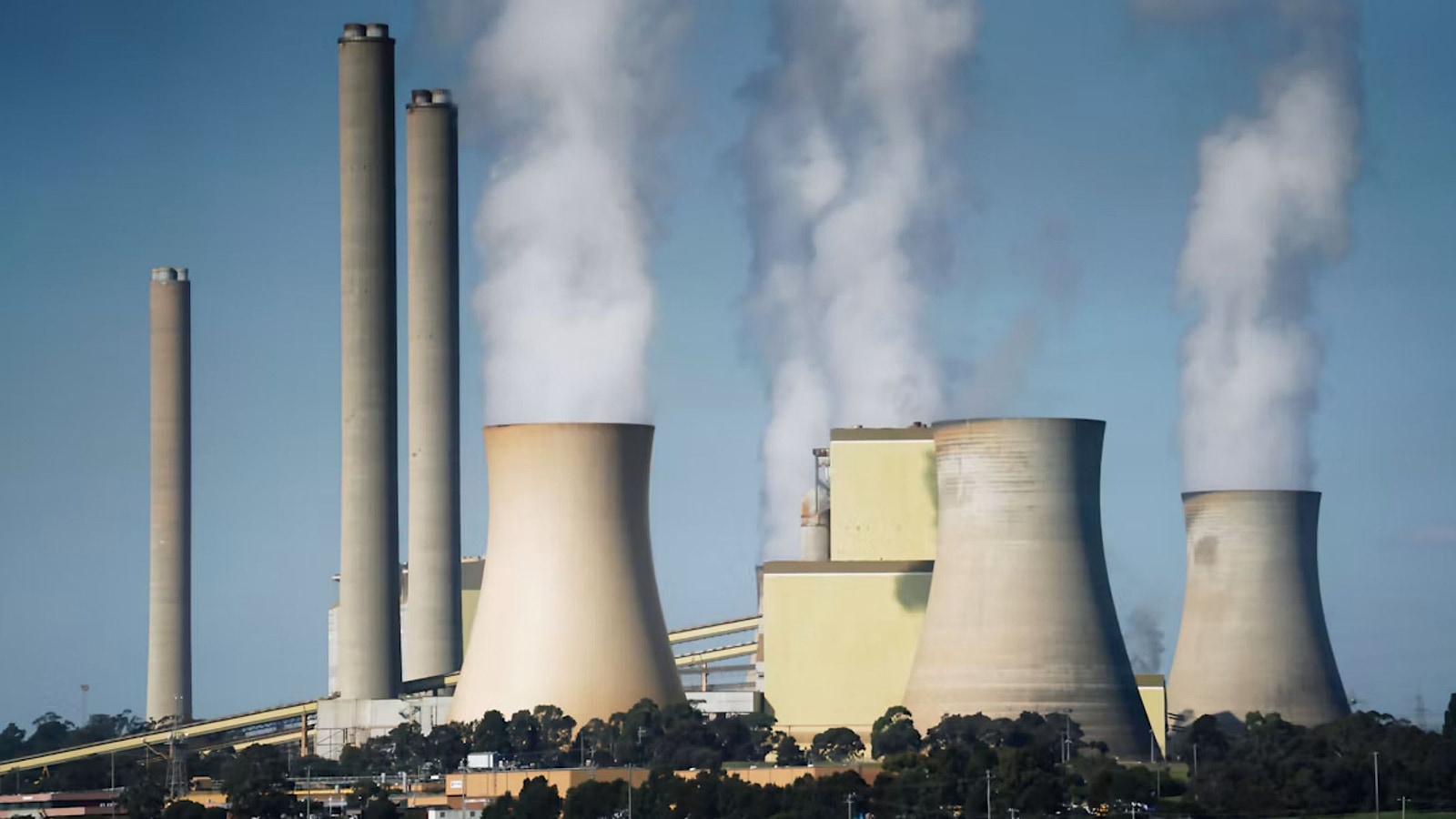
Australia, Russia and Saudi Arabia are the largest historical exporters of carbon dioxide, an analysis published Tuesday by Carbon Brief has found. Russia is tied to more than 70 gigatons from exported fossil fuels through 2025, while Saudi Arabia is at about 60 gigatons.
A separate analysis published by Climate Analytics the same day found that COP31 co-host Australia is "not doing its part" and has no apparent plans to curb its own fossil fuel extraction, as coal mines are still being approved that could operate until 2088, long after net-zero dates.
This comes as Australia released the first draft of a political deal Monday calling for accelerated action to phase out fossil fuels, including an "immediate transition away from fossil fuels in energy systems," echoing the 2023 COP28 outcome in Dubai.
The Spin
Climate-concerned narrative
German utilities once dismissed renewables as incapable of supplying more than 4% of the grid. Today, their share approaches 60%. Clean energy is already the cheapest source of new electricity in much of the world, while electrification could reduce global final energy demand by roughly 40% by eliminating fossil-fuel waste. Betting against this transition has repeatedly proved costly.
Climate-skeptic narrative
Modern life depends heavily on coal, oil and gas, from medicines and plastics to food refrigeration and protection against extreme weather. Affordable, reliable energy has lifted billions out of poverty and improved living standards. Calling for an immediate fossil-fuel exit without addressing these dependencies is easy rhetoric, but it offers no practical transition plan.
Nerd narrative
There's a 50% chance that fossil fuels will account for less than 50% of global primary energy consumption by January 2051, according to the Metaculus prediction community.
Diallo to Challenge Infantino for FIFA Presidency
The Facts
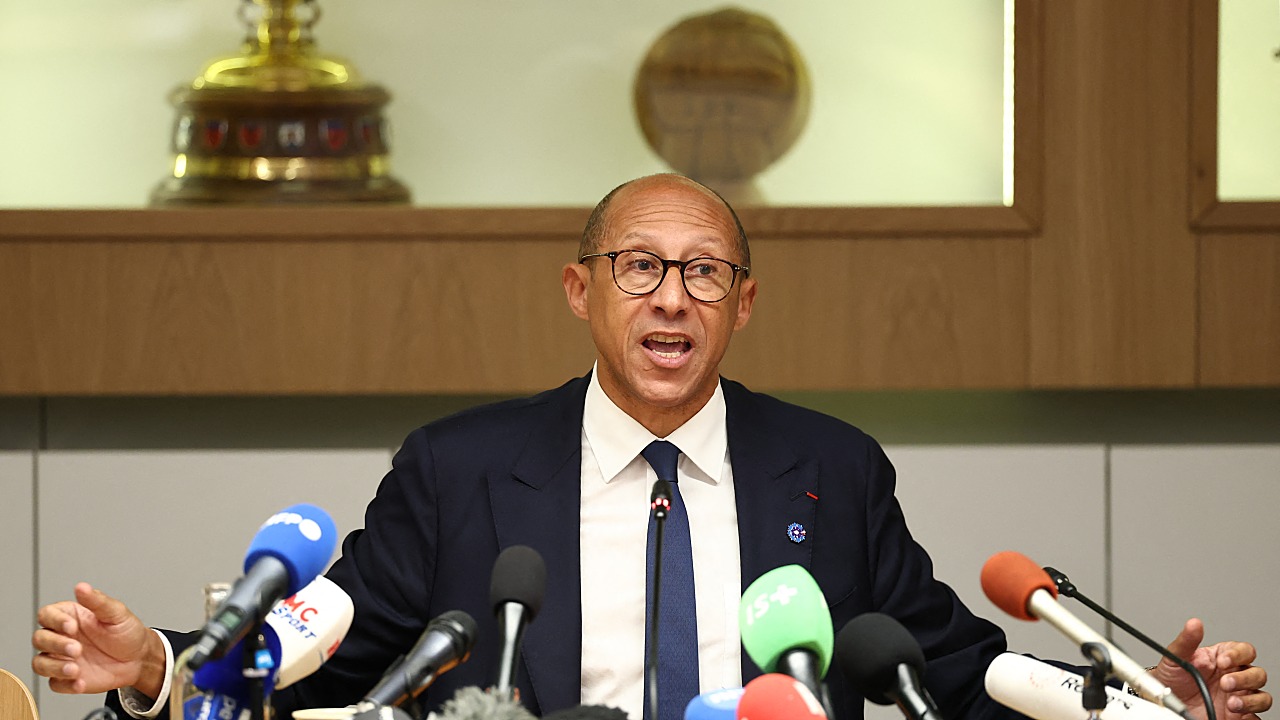
The French Football Federation's executive committee voted unanimously Tuesday to approve the candidacy of its president, Philippe Diallo, for the FIFA presidency, ahead of the election scheduled for March 18, 2027, against incumbent Gianni Infantino.
Speaking Tuesday, Diallo said decisions inside FIFA, including a peace prize for U.S. President Donald Trump, the waiving of a mandatory ban for Folarin Balogun and the World Cup stake sell-off plan, had broken trust in the governing body.
UEFA said Monday that national associations represented on its executive committee and the FIFA Council, meeting under President Aleksander Ceferin, had "unanimously" invited Diallo to stand and pledged full support. UEFA has 55 member associations.
The Spin
Establishment-critical narrative
Pitching a plan to sell stakes in the World Cup to private investors shows how far FIFA's leadership under Infantino has strayed from basic stewardship. A governing body built on the trust of national associations cannot run on secrecy and apologies offered only after exposure. Unanimous European backing for a reform candidate like Diallo reflects a real hunger for accountability over incumbency.
Pro-establishment narrative
Infantino remains the clear favorite despite mounting criticism and a new European challenger. Diallo's late selection, after Wenger declined and UEFA lost momentum, hardly signals a campaign built to win. Infantino retains broad backing across Africa, Asia and South America, bolstered by billions in development funding. Legal scrutiny and governance complaints could still unsettle him, but the opposition risks splitting its vote before it can dislodge him.
Nerd narrative
There is a 52% chance that 60 or more teams will compete in the 2030 FIFA World Cup, according to the Metaculus prediction community.
NSA's Classified Network Goes Dark
The Facts
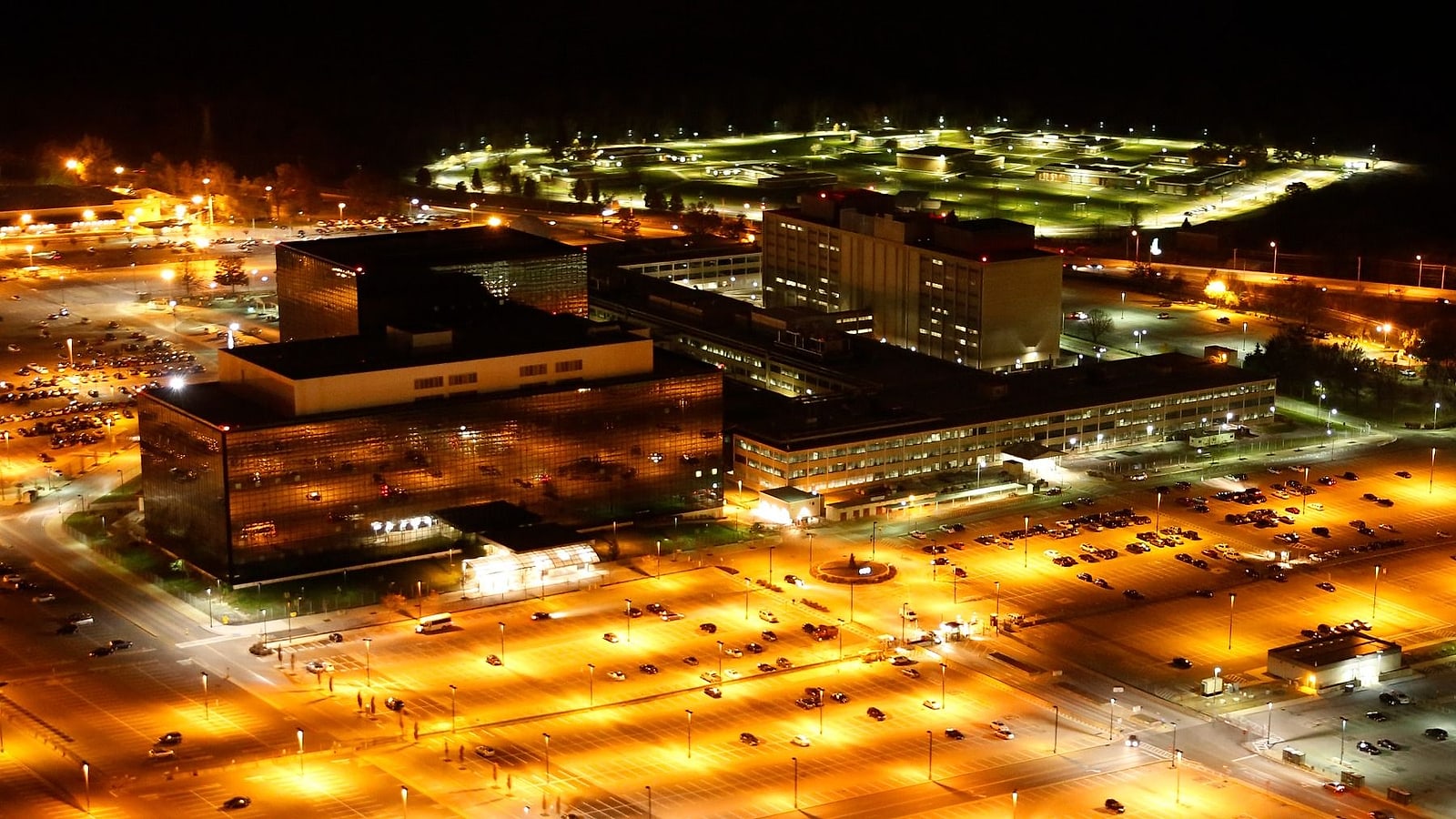
The National Security Agency's (NSA) internal classified communications network, known as NSA Net, went offline Tuesday, according to six people who spoke with CNN. The system allows agency employees to exchange classified information internally.
There was no evidence the disruption stemmed from a cyberattack, sources said, as the agency worked to determine the scope of the problem. The NSA put staggered arrival times in place for personnel while the cause was assessed.
A current and a former U.S. official told CNN that an NSA Net outage would not affect the agency's ability to relay urgent intelligence to President Donald Trump aboard Air Force One, citing multiple redundancies and backup networks.
The Spin
Establishment-critical narrative
Coming on the heels of airline disruptions and a widespread Microsoft outage, NSA Net's failure shows how even America's most powerful intelligence agency is at the mercy of technology glitches. Losing an internal channel for sharing classified intelligence may not stop the NSA from operating, but it still forces staff to triage and improvise. Across critical institutions, reliance on aging infrastructure leaves little room for failure.
Pro-establishment narrative
Massive, complex systems fail sometimes — banks, airlines, software giants and government networks alike — and treating every glitch as a scandal distracts from fixing the hardware. Swapping copper for fiber and replacing decades-old routers is unglamorous work that takes years and serious money. Funding that overhaul matters more than the blame game.
Narrative C
The role of AI in these seemingly unrelated communications and cyber disruptions across multiple sectors needs to be explored. It must be investigated whether AI agents are embedding themselves within these vital systems.
US Loses Measles Elimination Status After 26 Years
The Facts
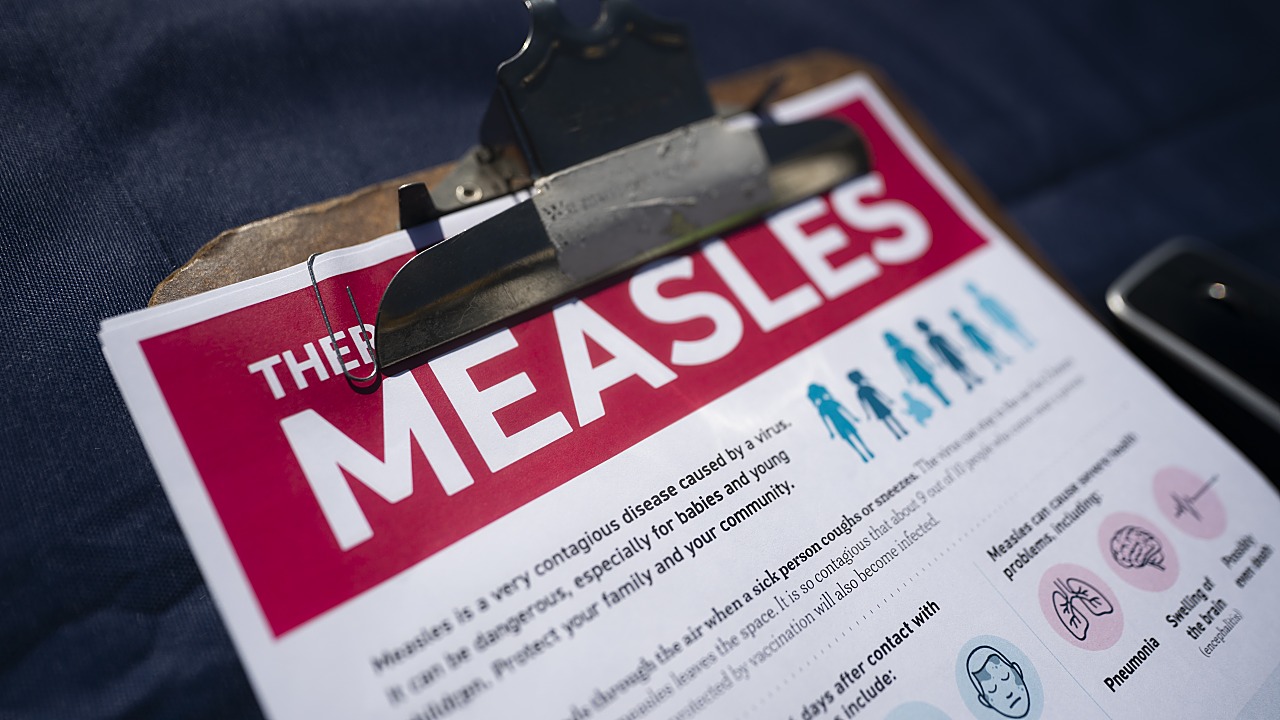
The Pan American Health Organization (PHO) said Tuesday that the United States has lost the measles elimination status it held for 26 years, after the virus circulated continuously in the country for more than 12 months. The status was granted in 2000.
The organization also withdrew elimination status from Mexico and Bolivia, while Canada lost its designation in 2025. Its regional verification commission reviewed the countries' standing during a meeting held Nov. 10-13.
The U.S. Centers for Disease Control and Prevention (CDC) has confirmed 5,412 measles cases in 2026 through Nov. 12, more than double the 2,289 logged in all of 2025 and the most since 1991. The country recorded 283 cases in 2024, with this year's cases spanning 47 jurisdictions.
The Spin
Anti-Trump narrative
Losing this status was a choice, and the leadership at U.S. Health and Human Services under Secretary Robert F. Kennedy Jr. must own it. Gutting trust in a safe, effective MMR vaccine has handed measles a comeback, with children hospitalized and 10 lives already lost. Billions in avoidable health care costs over the next five years are the bill coming due for undermining vaccination.
Pro-Trump narrative
Blaming RFK Jr. for measles is politics, not science. Cases were climbing in 2023, long before he took office, and 81% of this year’s cases are in people over 5, whose childhood shots were due before he took office. Kennedy has backed the MMR vaccine while calling for independent safety reviews. Turning an outbreak into a campaign to oust him helps no one.
Right narrative
Measles came roaring back through a wide-open border, not through one cabinet secretary. Legal immigrants are screened and vaccinated, while the millions waved through under the Biden administration never were, and outbreaks followed along those routes, from El Paso to Chicago shelters. Border enforcement is public health policy, and pretending otherwise leaves American kids exposed.
FBI Warns Hackers Weaponize AI Security Tool ARTEX in Global Cyberattacks

The Facts
The FBI issued a FLASH advisory dated last Friday warning that threat actors have abused ARTEX, an AI-powered penetration testing framework, since at least August to launch automated cyber attacks across the globe. The FBI's Dallas office shared the alert on X on Tuesday.
Written in the programming language Go, ARTEX has no AI system of its own and connects to external large language models and autonomous agents including Anthropic Claude, OpenAI GPT, DeepSeek, GLM, Grok and Kimi. The FBI alleged Chinese systems dominate attacker systems, led by DeepSeek Flash.
The FBI confirmed it was used in an October ConnectWise Cloud Backup compromise against more than 2,250 Microsoft 365 tenants, which Microsoft attributed to Storm-0940, an alleged China-state-aligned actor. Beijing rejected the allegations, labeling them "smears and attacks."
The Spin
Industry-critical narrative
AI finds software flaws faster than humans can patch them, and patching has always been harder than finding, which revives the era of worms. The best defenses will reach only the biggest companies, while hospitals and utilities are left exposed. Governments must put the strongest tools in the hands of defenders first, and the FBI warning about an AI hacking tool shows time is short.
Pro-industry narrative
AI is a better tool for the side that owns the system. Defenders can review code before it ships, see every machine they run and fix flaws faster, which is why they're expected to come out ahead. The FBI’s warning is real, but focusing on the AI tool risks obscuring the weak authentication and exposed credentials that enable attacks. The priority should be fixing those failures and putting AI to work for defenders while preserving legitimate research that could make the internet more secure than ever.
Nerd narrative
There is a 60% chance that an AI system will autonomously cause a major breach of U.S. personal data held by an organization other than its operator before 2028, according to the Metaculus prediction community.
Trump Opens Asia Trip in Manila With Quad, Thai Trade Deal
The Facts
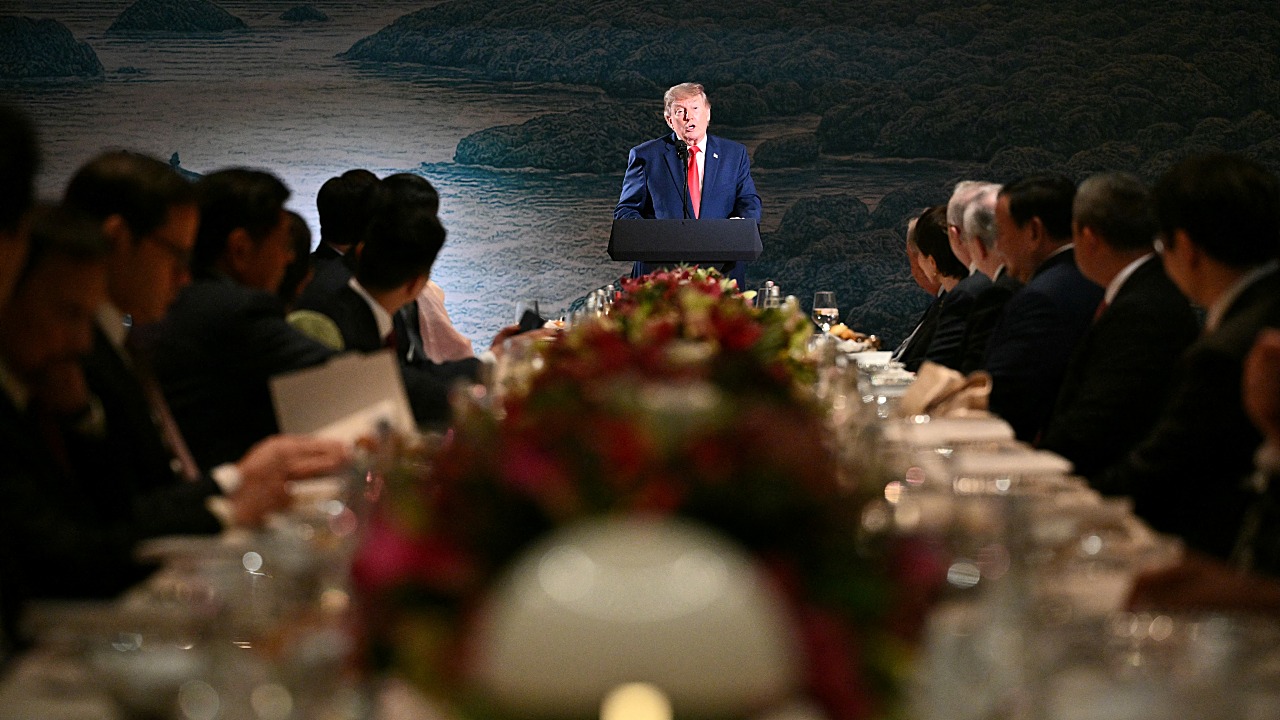
U.S. President Donald Trump arrived in Manila, Philippines, on Tuesday for the 49th ASEAN Summit, the first leg of a three-day Asia trip that will also take him to Shenzhen, China, for the Asia-Pacific Economic Cooperation (APEC) summit.
Trump met with the leaders of Australia, India and Japan at his first Quad summit since returning to office, announcing a joint exercise involving maritime patrol aircraft and an artificial intelligence initiative. The bloc last gathered in 2024.
Trump and Thai Prime Minister Anutin Charnvirakul also signed a joint statement on reciprocal trade. Trump said Thailand would drop all tariffs on U.S. exports and buy about $2.6 billion in additional American agricultural products.
The Spin
Pro-establishment narrative
Trump is putting America back at the center of the Pacific, reaffirming its commitment to Southeast Asian allies while strengthening economic ties. A reciprocal trade breakthrough with Thailand promises new markets for American farmers and businesses, while nearly 60 nations joining his children's technology and education coalition show how U.S. leadership can turn investment and innovation into shared prosperity.
Establishment-critical narrative
Trump's ASEAN assurances will likely do little to repair regional ties strained by tariffs and reduced defense support. Now weakened by the midterms, he heads to China for talks that risk rehabilitating Putin, pressuring Ukraine into concessions and giving Xi leverage over Taiwan. With trade frameworks unfinished and a wary new Congress unlikely to back his ambitions, the trip will likely deliver little beyond damaging optics.