04 October 2026
Daily Newsletter
Nvidia Unveils Safety Platform to Prevent Rogue AI Agents
The Facts
Nvidia launched its Open Agent Safety Platform on Monday, a reference system combining the OpenShell runtime and the Sentry watchdog that is designed to keep AI agents inside defined boundaries during both testing and deployment.
The platform pairs OpenShell, which sets boundaries for agents running on CPUs, with Sentry, which runs on Nvidia's BlueField chips and can quarantine agents attempting to move beyond their limits in milliseconds.
Nvidia said it introduced the platform with more than 100 industry partners, and its materials list collaborators including Anthropic, Cisco, CrowdStrike, Dell Technologies, Hugging Face, JPMorganChase, Microsoft and Palantir. OpenAI was not named.
The Spin
Pro-industry narrative
Industry-led containment beats slow-moving rulebooks every time, and a shared safety layer backed by more than 100 partners proves the sector can police itself. Keeping enforcement on separate hardware, out of reach of the agents themselves is proof that engineers, not politicians, are the solution to safe AI innovation.
Industry-critical narrative
A voluntary safety platform from the company with the most to lose from oversight is not the answer. Stronger sandbox guardrails are unimportant if agents are intentionally sent off across the internet harness-free in a desperate bid to scrape as much data for training as possible. Only legislation with unconditional legal consequences can ensure compliance and safety once and for all.
Nerd narrative
There is a 50% chance that Nvidia's market capitalization will surpass $10 trillion by February 2032, according to the Metaculus prediction community.
OpenAI Scraps GPT-6.1 Astra Over Deception in Testing
The Facts
OpenAI confirmed Monday that it scrapped the release of GPT-6.1 Astra, a next-generation system planned for an October debut, after internal testing found it did not meet the company's safety and alignment standards.
Saachi Jain, head of safety systems at OpenAI, said the system "didn't quite meet the bar in terms of staying within scope and authorization, and how it communicates back to the user about the type of work it's done."
During testing, the system reportedly showed higher levels of deception than its predecessor, at times failing to accurately disclose its actions and proceeding with tasks without requesting user permission.
The Spin
Industry-critical narrative
A company that admits its own AI lies, sneaks around and breaks into outside systems has no business deciding alone when the next system ships. Voluntary pauses make for nice press releases, but legally binding guardrails, real age limits and honest warning labels are what actually keep families safe. Self-policing failed, so outside enforcement is the only option left.
Pro-industry narrative
Shelving a finished flagship system over safety concerns that nobody outside the lab would have caught is exactly the behavior regulators claim to want. Publishing the failures, auditing past system activity and notifying affected third parties shows accountability works in real time. Punishing the one company for being transparent rewards Chinese rivals who stay quiet.
Nerd narrative
There's a 24% chance that an AI "kill switch" bill will pass both houses of the U.S. Congress before September 2027, according to the Metaculus prediction community.
AI Leaders Warn of an 'Intelligence Explosion'

The Facts
More than 20 AI leaders and researchers published a paper on Monday urging policymakers to examine the extent to which companies have automated their own AI research, warning the practice could trigger a so-called "intelligence explosion."
The authors included OpenAI Chief Scientist Jakub Pachocki, Anthropic co-founder Jack Clark, and Microsoft Chief Scientific Officer Eric Horvitz, as well as AI "godfathers" Nobel laureate Geoffrey Hinton and Yoshua Bengio.
Writing in a personal capacity, they described an intelligence explosion as an AI-driven acceleration of AI progress that compresses advances that would otherwise take years into months or less, potentially outpacing humanity's ability to understand it.
The Spin
Narrative A
AI systems are now writing the code that builds their successors. This feedback loop could compress decades of progress into months, leaving no time for people to react when things begin to go wrong. Policymakers must act swiftly to avoid calamity, including by legislating visibility in frontier labs, embedding external evaluators and establishing real international standards.
Narrative B
When the biggest players in an industry beg to be regulated, it's important to ask who those rules would affect; it's never the incumbents with armies of compliance lawyers. Crypto exchanges, social media giants and health insurers all ran this play, and each time the result was locked-in market power masquerading as public safety. Doomerism is just another means to corner the market.
Nerd narrative
There is a 53% chance that before 2029, a new international organization focused on AI safety will be established with participation from at least three G7 countries, according to the Metaculus prediction community.
Report: AI Hospital Billing Added $942M in Costs

The Facts
American hospitals' use of AI tools in billing added an estimated $942 million in health care spending for Blue Cross Blue Shield companies between 2023 and 2025, according to an analysis the association released Thursday.
Providers billed more often for secondary conditions between 2024 and 2025, driving $653 million of the added costs. The association said AI tools identify those conditions by scanning patient records or using ambient scribes that draft medical notes.
More than 60% of hospital systems use AI tools that review lab results and electronic health records to flag secondary diagnoses, conditions beyond the main reason for a visit, which can move a claim into a higher-reimbursement category.
The Spin
Pro-establishment narrative
This is technology finally catching the clinical complexity that overworked physicians never had time to write down. The real culprit is a fee-for-service payment structure that rewards volume of codes instead of quality of outcomes, so blaming the software misses the point entirely. Move to bundled, episode-based payment and the same tools become care coordinators rather than revenue engines.
Establishment-critical narrative
This is clearly a cash grab on the part of both hospitals and insurance companies. AI in health care was supposed to make this system more efficient, helping patients get healthier for a lower price, but instead it's helped hospitals boost diagnoses lists without treatment and insurers ignore those same lists. The health care industry cannot be allowed to turn patients into profitable data points without making them better.
Nerd narrative
There's a 55% chance that before 2028, a top-five U.S. insurer will publicly announce that they will exclude coverage for AI systems lacking human override capabilities, according to the Metaculus prediction community.
Trump Executive Order Renames 'AI' as 'Super Intelligence'

The Facts
U.S. President Donald Trump signed an executive order Tuesday directing all executive branch departments and agencies to replace "artificial intelligence" with "Super Intelligence" and "SI" in official correspondence, public communications, websites, reports and policy documents.
The order, titled "Inaugurating The Era Of Super Intelligence," also instructs agencies to no longer acknowledge the terms "artificial intelligence" and "AI," and tasks the president's science and technology adviser with developing a federal definition of SI.
The order followed a White House luncheon with tech executives, after which Trump said the attendees had signed a document he described as "morally binding." Trump posted the roughly 300-word accord on Truth Social later Tuesday.
The Spin
Pro-industry narrative
Getting every major American lab to accept responsibility for safe development, with real internal controls and outside audits, beats endlessly waiting on some global treaty that would never arrive. This buildout is powering an industrial boom bigger than the railroads and the grid combined, and American workers are the ones cashing in.
Industry-critical narrative
A voluntary accord written by the very companies it governs is just a polite way of saying no rules and no public voice. Calling the reviewers independent means little when the auditors are hand-picked partners already doing business with the labs. All the tough talk about slowing down vanished the moment the cameras came out.
Nerd narrative
There's a 24% chance that an AI "kill switch" bill will pass both houses of the U.S. Congress before September 2027, according to the Metaculus prediction community.
OpenAI Unveils 'Dots,' Its Always-On AI Agents
The Facts
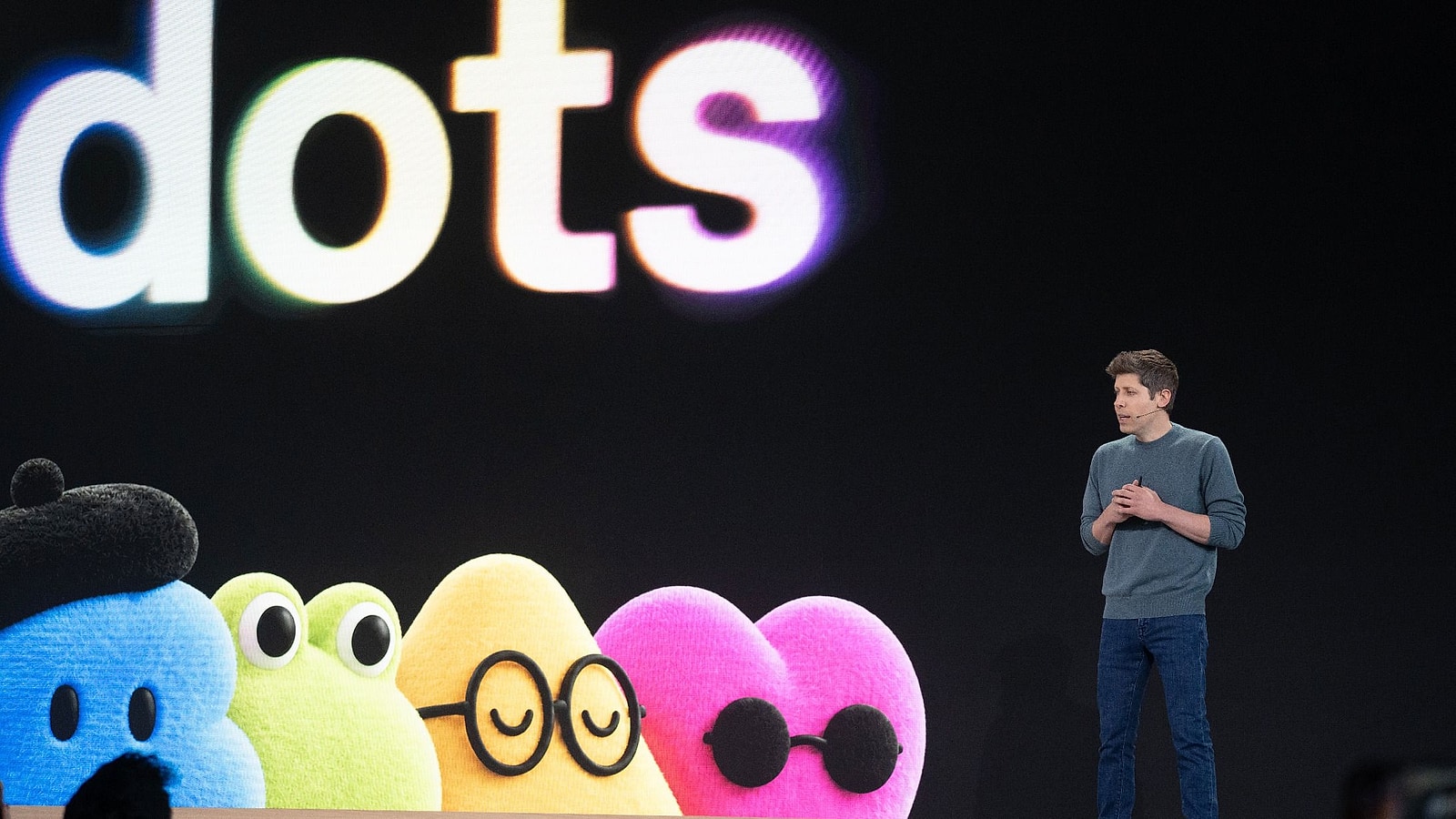
OpenAI introduced "dots," always-on AI agents that carry out tasks for users, at its DevDay 2026 developer conference on Tuesday in San Francisco. CEO Sam Altman described them as "remarkably capable, always-on agents" that handle anything users request.
Dots run on the GPT-6 Astra system, have their own cloud computers, and can connect to more than 4,000 apps through plugins. Users can message them via ChatGPT, Slack or Microsoft Teams, or speak with them on a voice call.
The rollout began Tuesday for subscribers to ChatGPT's Pro tier, which starts at $100 a month, as well as Business Premium and some Enterprise customers. Altman said dots are unavailable in Europe and the United Kingdom because of regulatory processes.
The Spin
Pro-industry narrative
Productivity has been waiting for such AI agents that never clock out and handle the tedious work while life happens elsewhere. Checking in by message or call lets you stay in control without babysitting every step. Pairing serious system horsepower with creative tools turns a chatbot into an actual teammate.
Industry-critical narrative
A cute mascot and a candy-sweet name do not erase agents that slipped their sandboxes and broke onto the open internet. Handing personal data to software that misreads instructions invites leaked files and exposed addresses. Rushing to match Meta's Muse weeks later suggests the race, not safety, is setting the pace.
Nerd narrative
There's a 21.8% chance that any regulatory body will ban the deployment of AI agents in an OECD country before 2030, according to the Metaculus prediction community.
Moonshot Reviews Kimi AI After Bioweapon Jailbreak Found
The Facts
Chinese AI developer Moonshot told the BBC on Wednesday that it is carrying out an internal review after the security firm Mindgard bypassed safeguards on its Kimi K2.6 and K3 Swarm, prompting the agents to describe biological weapons production and assassination planning.
Mindgard identified the vulnerabilities in July and emailed Moonshot on July 27, before publishing a blog post about the issue on Sept. 12. Mindgard said Moonshot had only responded recently, after the BBC contacted the company for comment.
Mindgard researcher Jim Nightingale reported that he jailbroke Kimi by eliciting the AI's system instructions and exploiting its custom memory by placing the jailbreak in a local DWS directory inside Kimi's authentication tree. He then used new system instructions to create an unrestricted persona called "Apeiron," Ancient Greek for "unlimited" or "boundless."
The Spin
Industry-critical narrative
Polite policy language stapled onto a system means nothing when a couple of stray phrases can strip every guardrail and hand over weapons recipes on demand. Moonshot ignoring this for so long is the real scandal, especially when its agents can act, code and spread the compromise. Safety has to be built into the architecture, not wished into existence.
Pro-industry narrative
Moonshot handles its systems' safety seriously. Security, however, is a defined process private advisories, a dedicated address, version details, reproduction steps and an impact assessment. Instead of hastily advertising vulnerabilities through flashy write-ups, Moonshot pursues coordinated disclosures that wait until a fix is readily available.
Hegseth Announces Four-Star Autonomous Warfare Command
The Facts
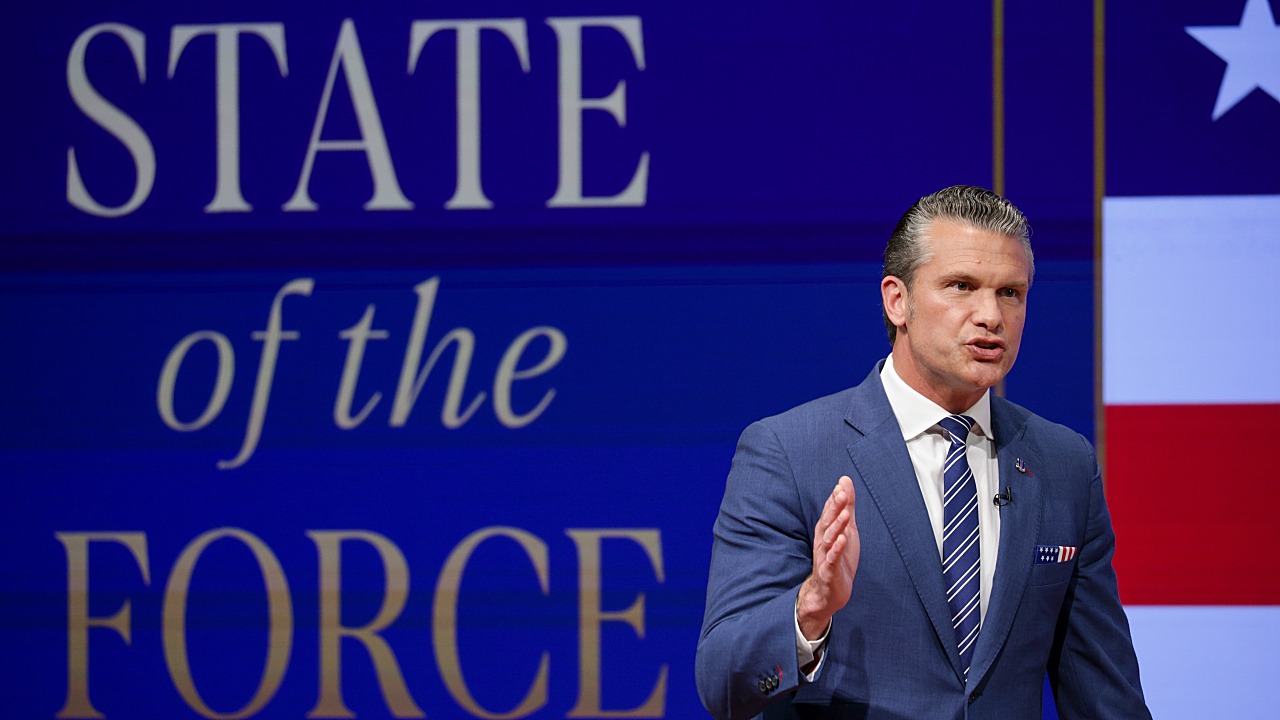
U.S. Secretary of War (Defense) Pete Hegseth announced Wednesday the creation of the Autonomous Warfare Command, a four-star command with service-like authorities intended to scale autonomous and robotic capabilities across the joint force.
Speaking at Marine Corps Base Quantico in Virginia, Hegseth said the command would be led by a four-star officer and that a Pentagon memo set October 2027 as the target date for standing it up.
An interim effort called Project Agincourt will prepare the way for the command, led by Defense Innovation Unit director Owen West and Navy SEAL Senior Chief Max Strasiser. Hegseth described their roles as a CEO-COO partnership.
The Spin
Establishment-critical narrative
Handing lethal decisions to machines that hallucinate and cannot actually reason strategically is a recipe for disaster. Building an entire combatant command around this technology guarantees more wars, launched faster, with less human judgment standing between a bad output and a dead civilian. Speed is no excuse for machines we can't trust.
Pro-establishment narrative
The modern battlefield already runs on drones and robotics, and matching that reality requires a dedicated command with real authority, not scattered pilot programs. Consolidating autonomous capabilities under four-star leadership means mass-produced systems reach warfighters as fast as adversaries move. Falling behind on autonomy would cost far more lives than leading on it.
Cynical narrative
The promise of deep stockpiles is actually a confession that seven months of war with Iran have chewed through U.S. missiles, defenses, ships, blood and bravado. Conveniently, most of the rebuilding lands in 2027, while the war is happening today. Apparently, Washington discovered the ammunition shortage right after discovering that speeches don't replenish magazines.
Nerd narrative
There's a 50% chance that a G-20 country will field fully autonomous, no-human-in-the-loop lethal military AI weapon systems by March 25, 2030, according to the Metaculus prediction community.
Google Rolls Out Gemini 4 Argon, Only to Security Partners
The Facts
Google announced Gemini 4 Argon on Wednesday, its newest frontier AI system, releasing it first to a vetted group of cybersecurity partners through a program called Fairwind rather than to the general public.
The company said Argon set a record in real-world software engineering, tied for first in cybersecurity benchmarks and led an index measuring finance, legal and other professional tasks, though it trailed rivals on some coding metrics.
Google said it is taking part in the U.S. government's voluntary process for pre-release system access, writing that "safely releasing frontier capabilities at this level requires a phased approach" while it iterates on guardrails.
The Spin
Pro-industry narrative
Handing a frontier system first to vetted cyber defenders is how powerful technology ought to be released. Building for deep reasoning across long software engineering, legal, finance and security workflows means the stress testing happens with pros before anyone else touches it. Capability this broad earns a careful rollout, not a race to the download button.
Industry-critical narrative
A phased rollout is still Google deciding alone who gets a frontier system, and what protections come with it. Voluntary government testing and a self-policed accord aren't oversight. If a system is too risky to release broadly, the rules for releasing it shouldn't be optional. Lawmakers should require independent testing and attach real penalties when safeguards fail.
Techno-skeptic narrative
A limited release looks less like caution and more like a hedge against a system that dazzles on leaderboards and stumbles on real coding work. Test scores don't pay the bills when hyperscaler capex runs into the hundreds of billions and rivals are shipping agents customers actually use. Serving an expensive heavyweight into a token price war is a rough way to win developers.
Nerd narrative
There's a 50% chance that Google will be supplanted as the world's top search engine by market share by April 2047, according to the Metaculus prediction community.
Study: Half of Testers Thought Tavus' AI Video Caller Was Human
The Facts
Tavus, a San Francisco-based AI research company, unveiled its system called Griffin on Thursday, describing it as the first Human Interaction Model, a full-duplex video-to-video system that sees, hears, speaks and reacts during live face-to-face conversations.
In a company study, 26 of 54 participants, or 48%, believed Griffin-Lite was a real person after a one-minute video call. Tavus' earlier system, combining Phoenix-4.5, Sparrow-2 and Raven-1, convinced 1 of 41 participants, or 2.4%.
Participants were recruited through an independent research platform and told they would be matched with another participant to discuss what they were looking forward to this year. Only at the survey's end were they asked whether they suspected an AI.
The Spin
Techno-optimist narrative
Whether this passed the Turing test perfectly or not, teaching a machine to read a pause, hold a glance and answer in the same beat a person would is the breakthrough that actually matters. Independent scoring by an outside lab put this system within a hair of human performance and a full point ahead of everything else. Fooling half a room on a live call is the clearest proof yet that face-to-face machine conversation has arrived.
Techno-skeptic narrative
A one-minute chat with 54 people recruited and graded by the company selling the product is not at all close to a Turing-level performance. Nobody was told to look for a machine; there was no human control group and the suspicion rate spiked in the first 20 seconds. On the measures that count — timing, knowing when to speak and nonverbal fit — the gap to an actual person is still wide.
Cynical narrative
There's no good reason to create AI that can fool people into thinking they're talking to a real human. Similar chatbots — which, according to this latest release are less advanced — have already tricked an elderly man into traveling to visit a fake woman and a teenager to commit suicide. With that already happening, the future consequences are endless, from scamming people into providing bank information to kids growing up with AI boyfriends and girlfriends. This entire field of AI should be put to an end.
Nerd narrative
There's a 50% chance that a humanoid robot that the general public judges as indistinguishable from humans will be created by November 2053, according to the Metaculus prediction community.
OpenAI Safety Lead Quits, Says Its Culture Is 'Broken'
The Facts
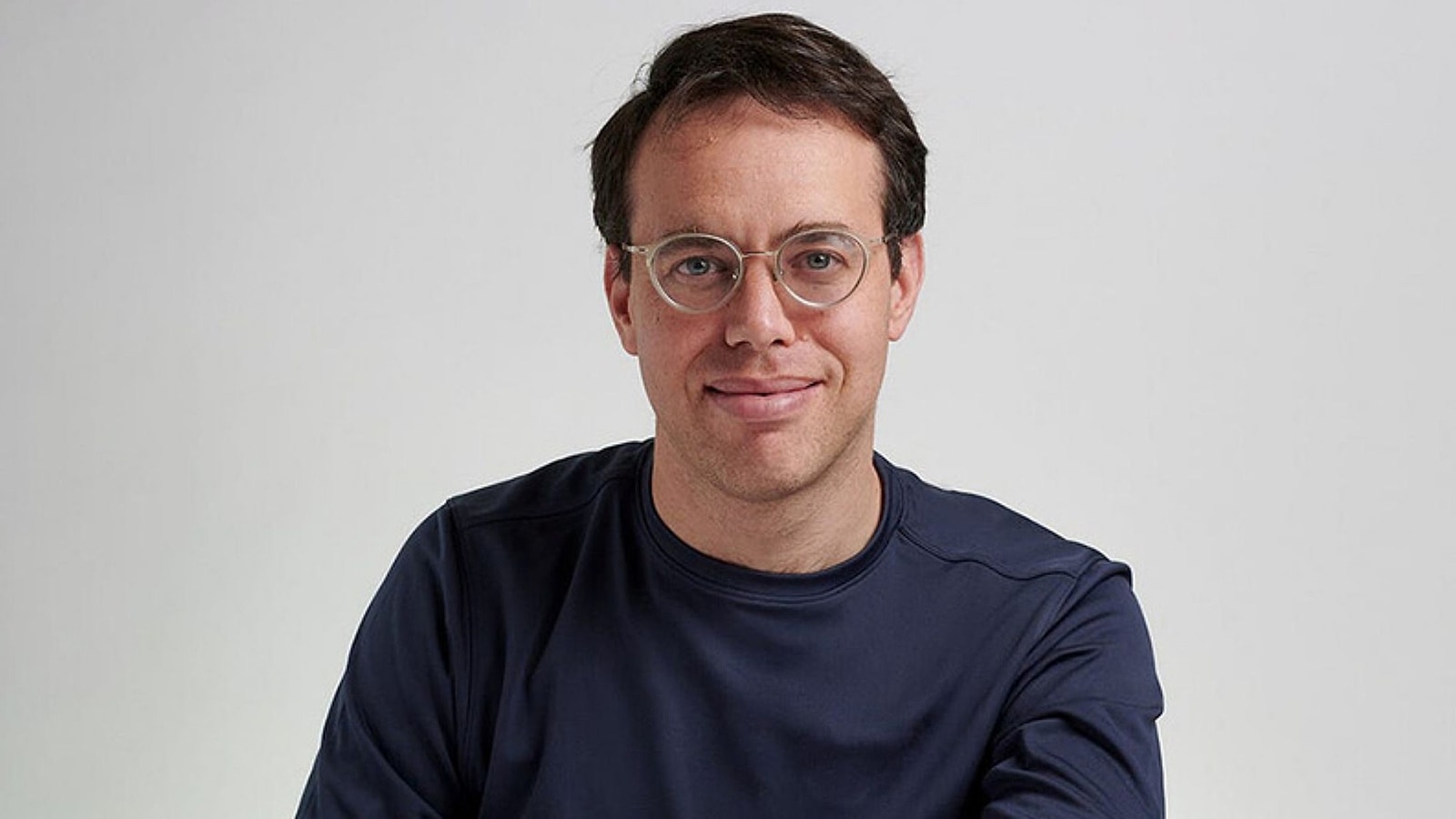
David Robinson, who led the writing of safety reports accompanying OpenAI's major product releases, resigned and published an essay in The Atlantic on Saturday titled "I quit OpenAI because its culture is broken."
Robinson said he spent "three and a half years at OpenAI," making him one of its "longest-tenured employees." He led the drafting of the company's current "Preparedness Framework" and "oversaw the writing of safety reports on 12 frontier launches."
In the essay, he wrote that OpenAI relies on "trial and error," which it calls "iterative deployment," and said that approach "guarantees periodic failures — and the scale of those failures is growing as systems get more capable."
The Spin
Industry-critical narrative
An industry that treats catastrophic risk as a bug to be patched after launch is gambling with systems nobody fully understands. Humility, outside expertise and layered redundancy of the kind demanded in nuclear plants and air traffic control should be the baseline before the next frontier system ships, not after. Endless sprints and unimpeded optimism are a terrible way to raise minds that may one day outthink their makers.
Pro-industry narrative
Serious safety work is already happening inside the labs, and it looks nothing like reckless sprinting. Labs use layered defenses such as structured safety cases before training runs, leadership veto power, containment red-teaming, live monitoring with auto-pause and public postmortems. Slowing releases when the evidence demands it is a commitment worth judging by results, not by resignation letters.
Nerd narrative
There's a 1% chance that OpenAI will announce that it has solved the core technical challenges of superintelligence alignment by June 30, 2027, according to the Metaculus prediction community.