13 March 2026
Daily Newsletter
US KC-135 Refueling Aircraft Crashes in Iraq

The Facts
A U.S. KC-135 refueling aircraft crashed in western Iraq on Thursday during Operation Epic Fury. The U.S. Central Command stated that the crash was not due to hostile fire or friendly fire, adding later that all six crew members are confirmed to have died.
Two aircraft were involved in the incident; one KC-135 landed safely, while the other went down in western Iraq. The Islamic Resistance in Iraq, a network of Iran-backed armed groups, claimed responsibility for downing the plane.
A spokesperson for Iran's Khatam al-Anbia Central Headquarters said: "All of the aircraft's personnel were killed." A U.S. official said the KC-135 that crashed had at least five crew members aboard, though KC-135s typically have a crew of three.
The Spin
Pro-Trump narrative
The KC-135 crash resulted from an accidental mid-air collision in friendly airspace. Tankers operate long hours in harsh desert conditions, and mechanical faults or human error remain real risks. Emphasizing hostile action distracts from the reality that complex air operations sometimes fail despite strict safety systems.
Pro-Iran narrative
American occupation forces violated sovereign airspace and paid the price when their KC-135 was shot down with appropriate defensive weapons. A second KC-135 was hit within 24 hours and limped to an emergency landing after taking fire. The crash is evidence that armed resistance groups can challenge and thwart U.S. military aggression in the Middle East.
Establishment-critical narrative
The joint U.S.–Israeli strikes on Iran have pushed the Middle East toward a dangerous breaking point. Further escalation could trigger a wider regional war, placing civilians at severe risk and undermining global stability. The U.S. and Israel must work toward ending hostilities immediately and return to diplomacy to prevent the conflict from spiraling further.
Nerd narrative
There's a 9% chance that if there is an American AUMF or declaration of war against Iran before 2030, the U.S. will control Tehran within one year, according to the Metaculus prediction community.
US Temporarily Eases Russian Oil Sanctions

The Facts
The U.S. Treasury issued a 30-day waiver allowing countries to purchase Russian crude and petroleum products already loaded on vessels as of Thursday, with the license valid through April 11. Treasury Secretary Scott Bessent said the move aims to "promote stability in global energy markets" during the conflict with Iran.
Oil prices surged above $100 per barrel on Thursday, with Brent crude settling at $100.46, the first time prices reached this level since August 2022. The International Energy Agency (IEA) released a record 400 million barrels of oil from emergency reserves in response to the crisis.
U.S. Democratic senators, including Elizabeth Warren and Chuck Schumer, said lifting Russian oil sanctions would fill Moscow’s war coffers and hand Putin windfall profits. European Commission President Ursula von der Leyen warned returning to Russian energy would be a strategic blunder for the EU.
The Spin
Pro-Trump narrative
Amid war-driven disruptions to global energy markets, lifting sanctions on Russian oil exports shows that the Trump administration recognizes global markets cannot function without Russian supply, exposing years of failed energy policy. The temporary measure won't significantly benefit Moscow, since Russia derives most of its revenue from extraction taxes rather than transit sales. The move stabilizes prices for American consumers while Trump's pro-energy policies drive domestic production to record levels.
Anti-Trump narrative
Easing Russian oil sanctions hands Putin a major financial windfall that helps fund his war in Ukraine while undermining years of coordinated Western pressure. As global energy markets tighten during the Iran conflict, Moscow’s revenues surged from about $40 to over $100 per barrel in days, creating fiscal headroom to sustain military operations. The move rewards Russian aggression and sets a dangerous precedent that sanctions architecture becomes negotiable under geopolitical price pressure.
Nerd narrative
There is a 25% chance that the U.S. and Iran will agree to a ceasefire before May 2026, according to the Metaculus prediction community.
US Sends Third Batch of Deportees to Eswatini

The Facts
Four additional migrants deported from the United States arrived in Eswatini on Thursday; two Somali nationals, one Sudanese national and one Tanzanian national. This marks the third batch of deportees to be sent to the southern African nation from the U.S.
The Trump administration has sent at least 19 people to Eswatini in three batches since July 2024 as part of third-country deportation agreements. The U.S. paid Eswatini approximately $5.1 million "to build its border and migration management capacity” in exchange for accepting up to 160 deportees.
Previous deportees sent to Eswatini in July and October 2025 included nationals from Vietnam, Cuba, Laos, Yemen, Jamaica and Cambodia. One Jamaican man was repatriated to his home country in September 2025, while a Cambodian man was reportedly due for repatriation.
The Spin
Pro-Trump narrative
The Trump administration's decision to deport dangerous criminals to Eswatini protects American communities from violent offenders whose own countries refuse to take them back. These individuals committed serious crimes, including child rape, murder, and assault, served their sentences, and now belong anywhere but on U.S. soil. The arrangement helps safeguard public safety while dealing with nations that refuse to accept responsibility for their own citizens.
Anti-Trump narrative
By paying Eswatini $5.1 million to imprison deportees without trial the Trump administration transforms the impoverished African nation into a dumping ground that violates constitutional law and human rights. The secret deal bypassed Parliament entirely, trapping people in an overcrowded facility with documented abuse while denying them due process or legal representation. This arrangement exploits a struggling monarchy to circumvent proper deportation procedures.
Nerd narrative
There is a 33% chance that the U.S. will establish a government program rewarding information leading to deportations before Jan. 3, 2027, according to the Metaculus prediction community.
Poland Vetoes €44B EU Defense Loan Access

The Facts
Polish President Karol Nawrocki vetoed legislation that would have allowed Poland to access nearly €44 billion ($50.3 billion) in EU defense loans under the Security Action for Europe (SAFE) program, which had been approved by parliament in late February.
Nawrocki argued the SAFE mechanism was "a massive foreign loan taken out for 45 years in a foreign currency" with interest costs potentially reaching 180 billion zloty ($48 billion), and warned that Brussels could halt funding arbitrarily, limiting Poland's sovereignty.
Poland was allocated €43.7 billion — the largest share among all EU member states — from the 150-billion-euro SAFE program, with the government planning to direct the funds toward 139 projects, including air defense, anti-drone technology and border security.
The Spin
Left narrative
Nawrocki's veto of the €44B SAFE program is pure political sabotage — blocking funds that 52% of Poles support just to kneecap Tusk before the 2027 elections. Poland secured the largest share of the entire €150B pot, and torpedoing that deal leaves defense contracts for 2027 without financial backing. The so-called "Polish SAFE 0%" alternative is fantasy finance built on a central bank that hasn't turned a profit since 2021.
Right narrative
Locking Poland into a year foreign-currency loan with interest costs potentially hitting 180 billion zlotys is a sovereignty trap, not a defense win. Brussels retains the power to arbitrarily withhold funds through conditionality rules, meaning Poland's security could hinge on foreign political decisions. A nation spending 4.8% of GDP on defense deserves a funding model it actually controls — not one that profits Western banks for generations.
Clyburn, 85, Bids for 18th Term in US Congress

The Facts
U.S. Rep. Jim Clyburn, 85, announced Thursday that he will seek an 18th term in the House, breaking with fellow Democratic leaders Nancy Pelosi and Steny Hoyer, who plan to retire at the end of their current terms.
Clyburn, first elected in 1992, served as House majority whip and later as assistant Democratic leader, making him one of the highest-ranking Black lawmakers in congressional history.
Clyburn said he consulted his three daughters and commissioned a poll showing "remarkable approval" among constituents before deciding to run, saying, "I do believe I'm very well equipped and healthy enough to move into the next term."
The Spin
Pro-establishment narrative
Clyburn's decades of delivering real results prove that seniority is a weapon, not a liability. If Democrats win the House, Clyburn is in line to receive several prestigious and powerful committee chairmanships, meaning he'll be able to deliver major results for South Carolina. A freshman backbencher simply can't do that.
Establishment-critical narrative
Clinging to a congressional seat at 85 isn't dedication — it's self-serving careerism that blocks a deep bench of fresh leaders from stepping up. Congressional seats aren't meant to be lifetime appointments, and hoarding power while the country struggles is indefensible. Clyburn should step aside and let a new voice fight for the future.
Nerd narrative
There's an 81.9% chance that Democrats will hold the most seats in the U.S. House of Representatives after the 2026 elections, according to the Metaculus prediction community.
Hegseth Makes Khamenei Claims, Reportedly Deploys Marines and Amphibious Assault Ship
The Facts
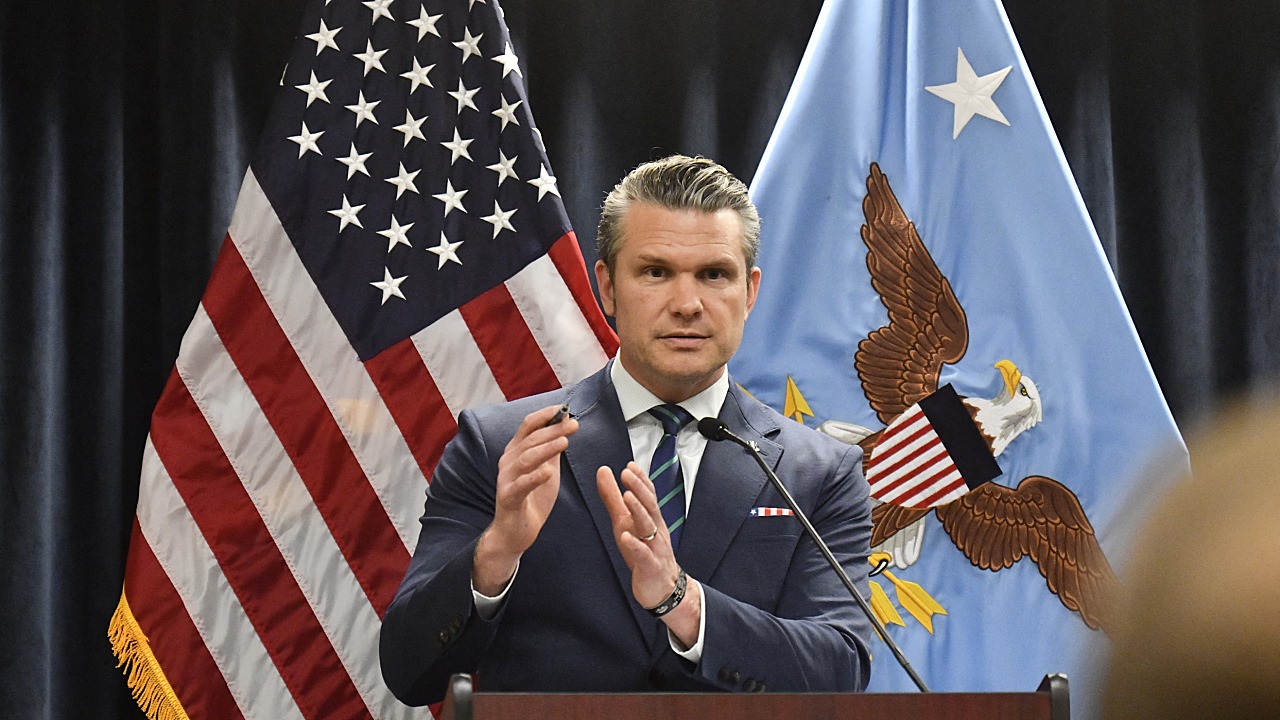
U.S. Defense Secretary Pete Hegseth said at a Friday briefing that Iran's missile volume is down 90% and one-way attack drones were down 95%, claiming the U.S. and Israel have struck more than 15,000 enemy targets since the conflict began. This comes as Axios also reported Friday that Hegseth is deploying thousands of Marines capable of ground operations, as well as the amphibious assault ship USS Tripoli, to the region. The Pentagon did not immediately comment on the report.
In the briefing, Hegseth also stated that Iran's new Supreme Leader, Mojtaba Khamenei, is "wounded and likely disfigured," noting that Khamenei's first public statement on Thursday lacked accompanying audio or video from Khamenei himself.
He continued: "It was a written statement... Iran has plenty of cameras and plenty of voice recorders. Why a written statement? I think you know why."
The Spin
Pro-Trump narrative
Operation Epic Fury has obliterated Iran's military at a pace the world has never seen — missiles down 90%, drones down 95% and zero air defenses, navy or air force left standing. Iran's new Supreme Leader is wounded and hiding underground, too scared to show his face on camera. This is what total military collapse looks like, and Iran's desperation in the Strait of Hormuz proves it. The left-leaning media needs to report these on-the-ground realities more truthfully.
Pro-Iran narrative
Despite U.S. claims about Iran's leadership being wounded and in hiding, Iran's new Supreme Leader Mojtaba Khamenei is safe and sound — confirmed through direct contacts close to the government. Millions of Iranians flooded the streets for Quds Day, showing unbroken national resolve after the attacks. A nation that is broken doesn't march by the millions.
Cynical narrative
Both parties are actively shaping the public view of the conflict's progress. Iran emphasizes heavy losses and portrays Mojtaba Khamenei as a resilient veteran to rally support and strengthen resolve at home. Meanwhile, Western media and sources amplify details of his injuries and minimize the impact of Iranian strikes to reinforce an image of unchallenged superiority. In modern warfare, controlling the story can be just as powerful as launching weapons — the side that dominates the information space often dictates the conflict's momentum and potential outcomes.
Nerd narrative
There's a 5% chance that a ceasefire in the 2026 conflict between Israel and the United States and Iran will be announced before March 15, 2026, according to the Metaculus prediction community.
Canada Tables Bill C-22 on Digital Access Powers

The Facts
Prime Minister Mark Carney’s Liberal government tabled Bill C-22, the "Lawful Access Act, 2026," on Thursday, introducing revised powers for police and the Canadian Security Intelligence Service (CSIS) to access digital information from electronic service providers.
Bill C-22 narrows the warrantless powers proposed in the earlier Bill C-2, restricting them to a "confirmation of service demand" requiring telecoms to confirm only whether they provide service to a specific person.
Under Bill C-22, police seeking additional subscriber details — such as a name, address or phone number — must obtain a court-authorized production order by demonstrating reasonable suspicion that a crime has or will occur.
The Spin
Pro-government narrative
Bill C-22 is exactly the kind of smart, necessary legislation — with built-in safeguards to protect Canadians’ privacy — that keeps Canadians safe in a digital age where criminals exploit every technological gap. Law enforcement has been hamstrung for decades while child predators, human traffickers and foreign threats operate freely online — that ends now. Every Five Eyes ally already has lawful access powers, and Canada finally catching up isn't surveillance overreach, it's basic public safety.
Government-critical narrative
Bill C-22 still threatens Canadians' privacy by lowering the legal standard to mere "reasonable grounds to suspect" and forcing telecoms to build backdoors that hackers and foreign regimes can exploit. Privacy lawyers confirm only a handful of concerns from the original bill were actually fixed, leaving surveillance infrastructure that — once built — won't go away. Tweaks to scope don't fix a framework that lets the state access sensitive personal data with dangerously weak judicial oversight.
Cynical narrative
Bill C-22 is a politically motivated surveillance expansion dressed up as public safety. After years of government-driven crises, Ottawa now claims sweeping new powers to track “extremism,” a label routinely applied to nationalist and right-leaning views. Forcing telecoms to store Canadians’ metadata for a year while expanding CSIS tools creates a system aimed less at crime than at monitoring dissent.
Genomic Study Rewrites Shark Evolutionary Tree
The Facts
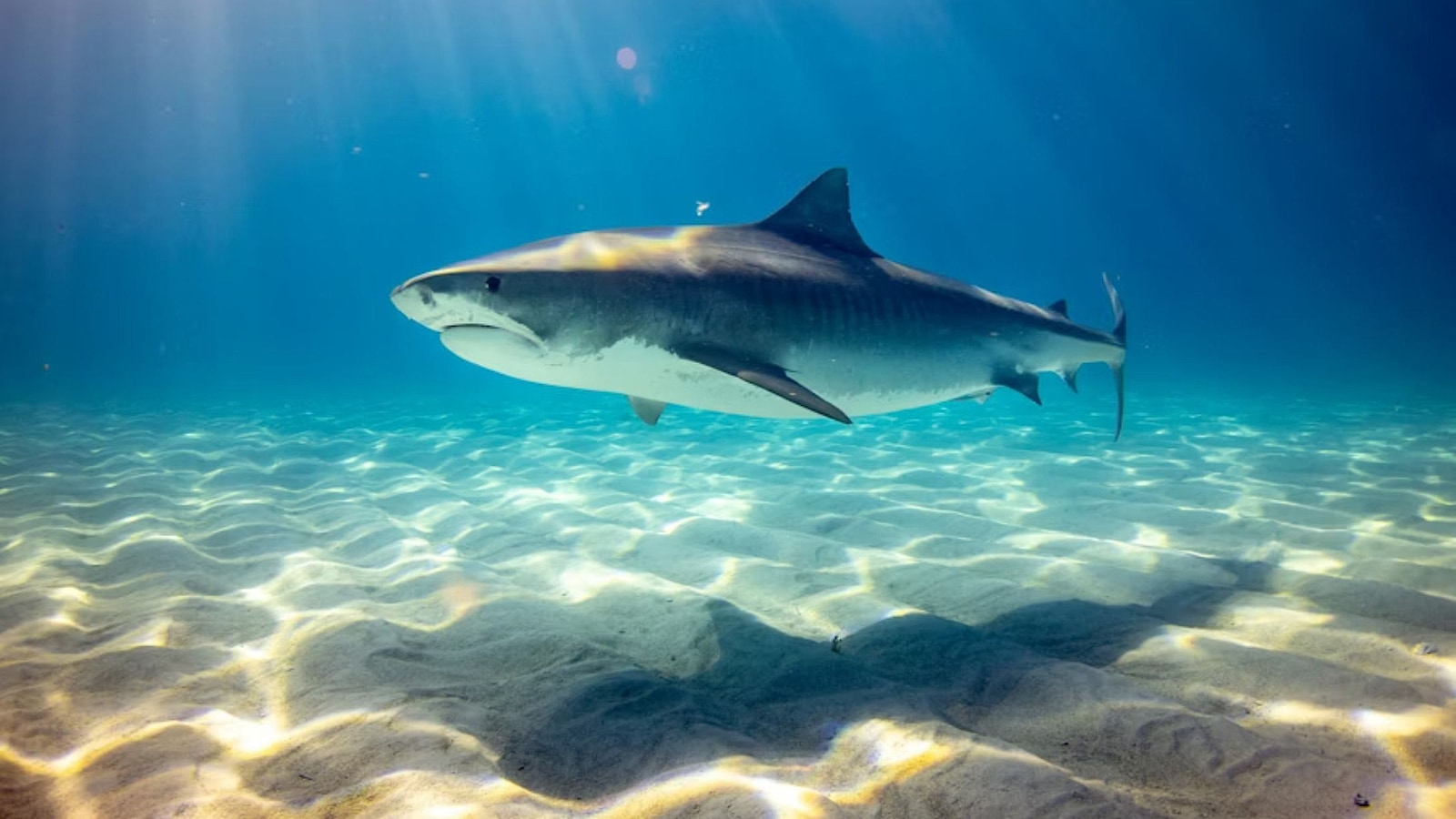
A genomic study of 48 shark, ray and skate species analyzed two types of genetic data — protein-coding sequences and ultra-conserved regions — to examine the evolutionary relationships among cartilaginous fishes, known as Chondrichthyes.
Protein-coding exons supported the traditional view that sharks form a monophyletic group, while ultra-conserved elements suggested sharks may be paraphyletic, with the shark family Hexanchiformes forming a lineage distinct from all other sharks, rays and skates.
Hexanchiformes — which include cow sharks and frilled sharks — have six or seven gill slits instead of the usual five, along with primitive-looking jaws, and retain the ancestral jaw structure of cartilaginous fishes.
The Spin
Narrative A
Genomic data is rewriting what's known about shark evolution, and the results are stunning — sharks may not even form their own distinct group depending on which genome markers get analyzed. The position of ancient lineages such as sixgill and frilled sharks throws the entire evolutionary tree into question. This isn't a minor footnote; it's a major unresolved issue in vertebrate science with real conservation stakes.
Narrative B
No fossil evidence of a common ancestor for sharks and rays has ever been found, and the creatures themselves are radically different in body shape, breathing mechanics and movement. Grouping them together simply because both have cartilage instead of bone is not proof of shared ancestry — it's an assumption. The far more reasonable conclusion is that these distinct creatures were designed separately from the start.
Nerd narrative
There's a 2% chance that a major cryptid discovery will be made by 2040, according to the Metaculus prediction community.
Qantas Pays AU$105M to Settle COVID Flight Lawsuit

The Facts
Qantas Airways has agreed to pay AU$105 million ($74 million) to settle a class action lawsuit over its handling of flight cancellations during the COVID pandemic, covering flights scheduled between Jan. 1, 2020, and Nov. 1, 2022.
The class action, filed in August 2023 by law firm Echo Law, alleged Qantas breached its contracts by issuing travel credits with expiry dates instead of cash refunds and engaged in misleading conduct under Australian Consumer Law.
The AU$105 million settlement is nearly double the AU$55 million provision Qantas had set aside for the case, as disclosed in its half-year 2026 financial results. Qantas said on Friday it agreed to pay the sum "with no admission of liability" under the settlement terms.
The Spin
Pro-establishment narrative
Qantas is settling to move past a complex pandemic-era dispute, not because it broke the law. Airlines worldwide faced unprecedented shutdowns, border closures and refund backlogs that strained systems overnight. Qantas has already removed expiry dates on COVID credits and allowed indefinite refunds — showing the airline has worked to fix issues and compensate customers while stabilizing operations after an industry-wide crisis.
Establishment-critical narrative
The AU$105 million settlement vindicates every passenger Qantas wronged by pocketing money for cancelled flights and stalling refunds for three-plus years before finally budging in 2023. The airline issued expiring credits instead of cash refunds, exploiting customers during COVID while benefiting from government support. Thankfully, parliamentary pressure and legal action forced Qantas to finally do right by the customers it exploited during COVID.
Nerd narrative
There's a 50% chance that a Nobel Prize will be awarded for COVID-related accomplishments by August 2027, according to the Metaculus prediction community.
FBI Opens First Ecuador Office as Quito Prepares for Major Offensive on Criminal Groups
The Facts
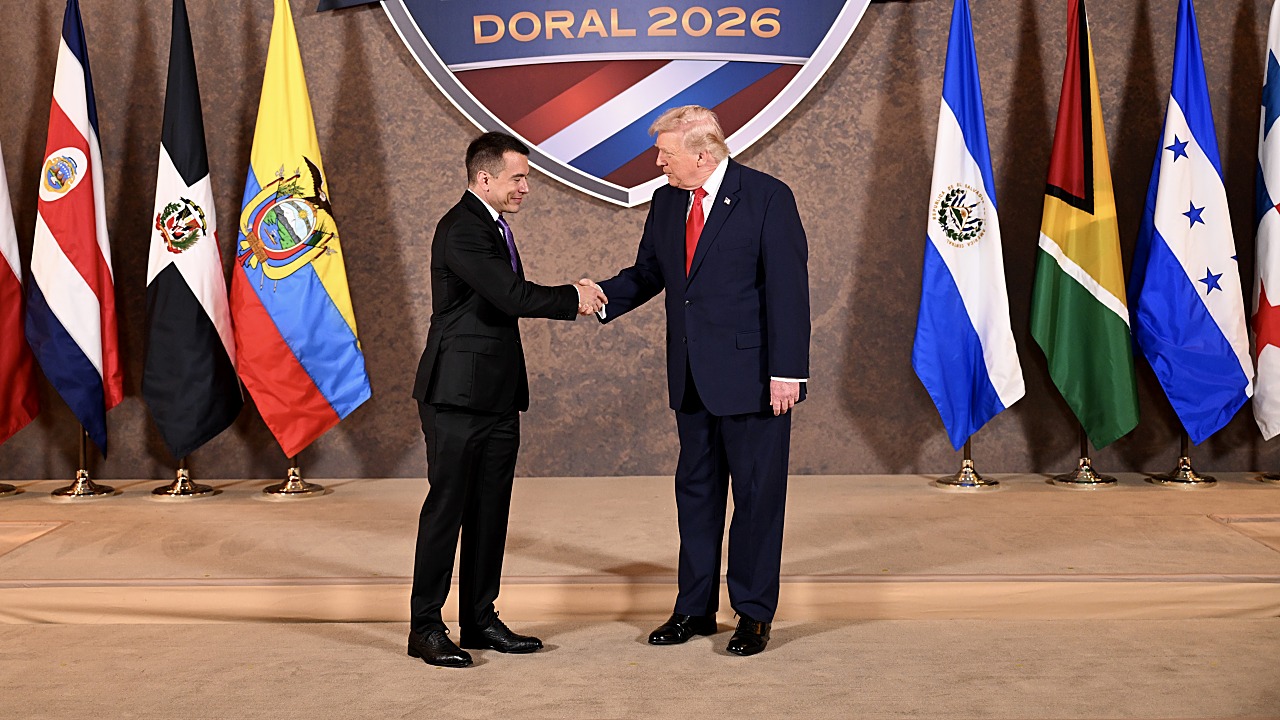
The U.S. Embassy in Ecuador announced on Wednesday the opening of the first Federal Bureau of Investigation (FBI) office in the country, with Ecuadorian Interior Minister John Reimberg telling reporters that collaboration between FBI agents and a national police unit would start immediately.
Under the U.S.-Ecuador agreement, cooperation will focus on identifying and prosecuting those involved in arms and drug trafficking, money laundering and corruption. Ecuador is the fifth country in South America to host an FBI office.
This comes as four Ecuadorian provinces, namely El Oro, Guayas, Los Ríos and Santo Domingo de los Tsáchilas, are set to be under a two-week nighttime curfew starting on Sunday, ahead of a major offensive against criminal groups with U.S. logistical support. A decree on the subject has yet to be published.
The Spin
Establishment-critical narrative
Washington is once again expanding its military footprint in Latin America under the banner of a war on narco-terrorism, with zero democratic mandate and no public accounting. In supporting Ecuador in lethal operations, the U.S. is making American taxpayers complicit with an authoritarian government that has been dismantling Ecuadorian democracy and human rights under the pretense of fighting drug cartels.
Pro-establishment narrative
Ecuador's security crisis is real, with U.S.-designated terrorist groups fueling soaring violence, infiltrating institutions and turning the country into a major cocaine transit hub. When an allied nation faces an existential threat from transnational criminal organizations, like Ecuador, the U.S. cannot stand aside. Doing nothing is a choice that would affect overall security in the Western Hemisphere — and which costs would fall hardest on Ecuadorians.

© 2026 Improve the News Foundation.
All rights reserved.
Version 7.18.3